3rd Saturday of each month | 8-12pm (lunch provided)
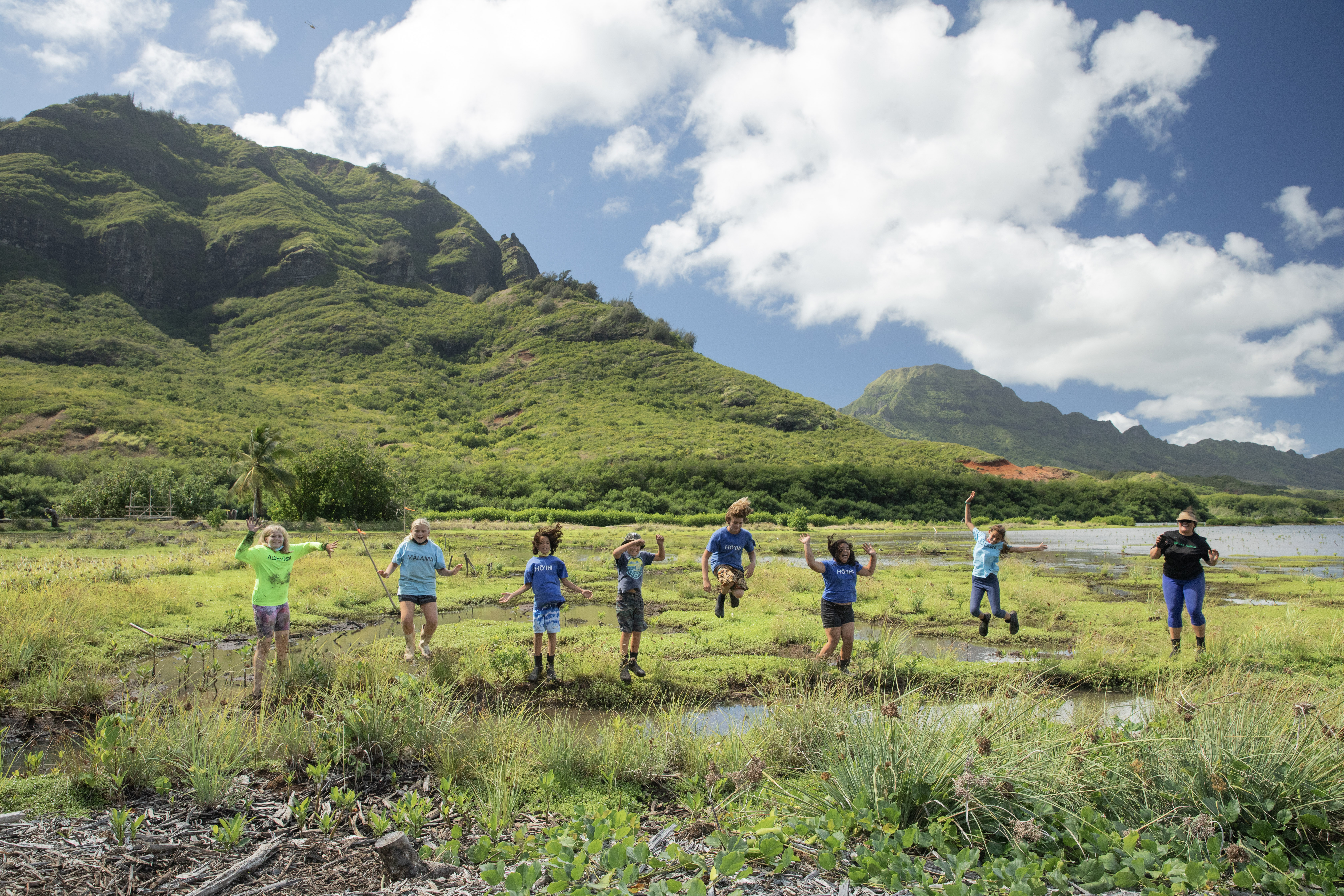
Join Mālama Hulēʻia as we gather every 3rd Saturday for our hands-on Community Workdays. After taking a pause due to COVID, we are thrilled to again see people back at the loko i`a again especially now that Alakoko has been purchased for protection, restoration, and education for future generations! We are happy to be in this new chapter as long-term community stewards of this special place, and to be with the amazing community that supports this effort.
REGISTER to save a spot as space is limited (registration opens the week prior). Sign up for our email list so we can send you a reminder to sign up.
We extend our heartfelt appreciation to the vibrant community of dedicated volunteers who came together to make our E Ku Ana Ka Paia a tremendous success. The enthusiasm, hard work, and commitment to Alakoko was instrumental in making the event possible. The generosity of the Lāhui’s is what defines us, and we are grateful for each individual who contributed their time and effort. Together, we have demonstrated the power of unity, of many hands, can leave a lasting impression on a place like loko iʻa.
Uhau Crews Hale Kuhikuhi Hale Pa’akaua Hui maka’ainana o Makana IWI KUA Kapoho Lima Kaeo Kauai Uhau Crew Kua’aina Ulu Auamo Kumanoikeala Lima Huli & Limahuli Gardens Loko Ea Paepae o He’eia Waipa Waimanalo Limu Hui Uhau Humu Pohaku Crew Ku mano i ke ala
Menehune Crew Clay Egan Gary Hofacker Jeff Kaohi Mark Hubbard Frank Whitman Hooulu Aina
Machine Operators Ho’ouka A. Nawai Apia Lance Fu-Taniguchi Keaka Flores Jonah Enrique Jesse Cummings Rider Cummings Josh Mori Punohu Kekaualua Jason Makaneole
Musicians& Crew Sight and Sounds Bronson Aiwohi Maluhia John Mahi Steve Mai’i DJ Yaris Solomon Kaawa
Food / Tents / Waste Addison Bulosan Addison Bulosan- Rice Street Business Association Christy Souza / Wong Kawika Smith Nicolai Barca Pelika Andrade Mahi Tents and Events Farmers that donated food and collaborated Lo’i Kalo Farmers
School Programs Waimea High School JROTC Kaua’i High School Boys Scouts Kaua’i Athletics
Other Agencies County EMS County of Kaua’i USFW & DOI
Various Groups & Volunteers Kauhi Agoon Grove Farms Decorations ~ Kahea Hamakua & Kali’a Caberto Dr. Evlsin Medical Crew Wa’a ~ Chris Kauwe Kaua’i T’s Ice company Japanese Grandma Kaua’i Community College Chock-Po’e Ohana Aaron Char and Rayana Waiamau Thelson Aana Wesley Yadao and Ohana Tyson Flethcer, Nakai, and ohana
Check-in Station Cont. Hōkūala, Timbers Resorts Anne Sachs Naomi Lewanski & ‘ohana Juan Gonzalez – Ocean Course
SPECIAL THANKS TO THE 2,000 COMMUNITY MEMBERS WHO JOINED US PHYSICALLY AT ALAKOKO FISHPOND AND TO THE MANY MORE WHO JOINED US MENTALLY AND SPIRITUALLY TO HELP PUT THIS HISTORIC EVENT IN THE MEMORIES FOR YEARS TO COME!
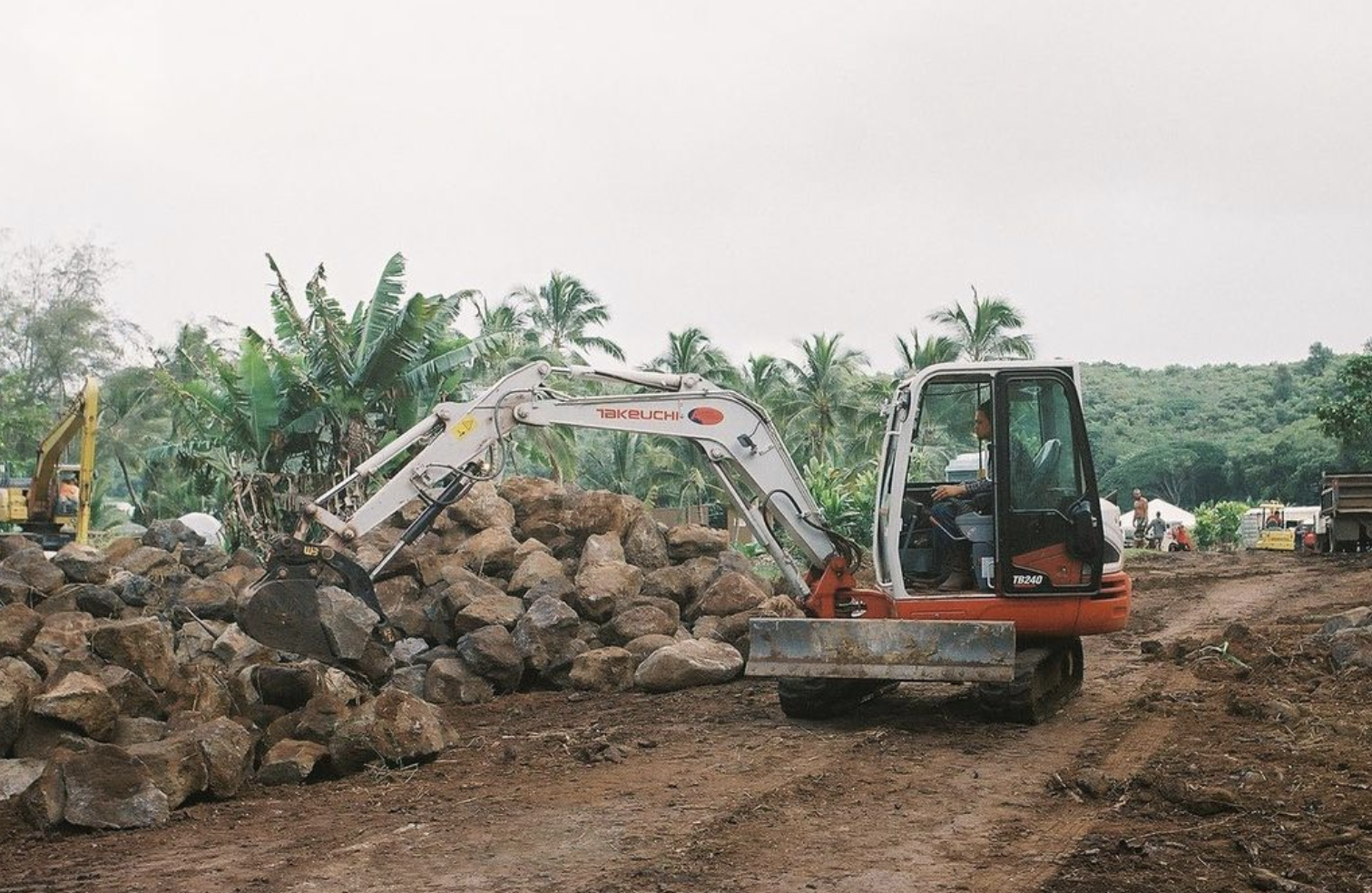
We extend our heartfelt gratitude to our generous sponsors, whose contributions made it possible for our volunteers to do this meaningful work for E Ku Ana Ka Paia. Education, community engagement, and our kuleana to Alakoko is what keeps the loko iʻa alive and thriving. Thanks to your contributions, we were able to mobilize our teams of volunteers before, during, and after the event. Thank you for being integral partners rebuilding the 2,700ft wall.
Grant funded by Freeman Foundation, in cooperation with Historic Hawai‘i Foundation, Historic Hawaiʻi.
Machines Allied Machinery Canen Ho’okano Drew Porter – BCI Contracting, Inc Estrella Hoku’ala Josh Mori – IWI KUA Jonah Enrique Kikiaola Kawika Smith – Kawika’s Tree Service, LLC Aaron Hoff – Keala Foundation Pat Porter
Buses Kawaikini PCS Hanalei Initiative Island School
Helicopters(mahalo for rerouting during the event) Air Kauai Air Traffic Control Airborne Aviation Ali’i Helicopters Blue Hawaiian Hunter & Jerry Hudson Island Helicopters Jack Harter Maunaloa Safari Helicopters Sunshine Helicopters
Sound System & Stage Maluhia Castillo Kurt Pantohan Rice Street Business Association – Addison Bulosan
Flights Kuaaina Ulu Auamo Air Traffic Control Hunter And Jerry Hudson
Media Akoni Bermoy Andrew Vastola Chris Kauwe & Sarah Blodgett Cliff Mello David Bergstrom Gowan Ohana Hoffman Ohana Logan Sowder Mark Holladay Lee/Leah Ta’ala Teak Tim Hennessy Twyus Peahu
Organizations Food Bank IWI KUA Kaiola Canoe Club Kamehameha Schools KUA Menehune Water Na Maka Onaona Screen Printing by Na Pua Noeau Rice Street Business Association Waipa
Safety and Medical Team AMS EMS Kauai Police Department Kauai Fire Department Lee Evslin, MD Warren Sparks, MD Erin Carrington, PA-C
Lua J & S Portable Toilets
Social Media Purple Mai’a Malama Huleia
Shave Ice Vendor Concessions Hawaiʻi LLC
Screen Printing Station Melia Chun of Na Pua Noeau
Seeing the fishpond activated was our biggest accomplishment. The week before and after our big event was inspiring. We had the uhau humu pōhaku community camping with us from across the pae ʻāina. Local businesses, machine operators, and media crews volunteers their time and efforts to be with us during this process. On the day of the event, we heard many Kauai natives sharing stories about their connection to the fishpond, and how powerful of an experience E Kū Ana Ka Paia was.
Although we faced a handful of challenges—from permits to working in high tides—the work we were able to do was truly transformative.
What’s next for Mālama Hulēʻia
We’ve been working non-stop since the E Ku Ana Ka Paia Event, and we’re excited to ride the momentum and enthusiasm generated by the mission of restoring Alakoko Fishpond. It was an inspirational day, and we continue in the spirit of Aloha ‘Āina. With the bones of the new retaining wall built, we now begin the work of reconstructing the kuāuna of the kuapā and rejuvenating the alawai/auwai situated in the mauka section of the fishpond.
Without your support, this would not be possible! Read more about our upcoming projects. Sign-up for our newsletter to receive information about volunteer opportunities at the fishpond, including our third Saturday Community Workdays.
Mahalo to all the press outlets that covered our story spotlighting the work that our nonprofit organization does day in, day out. This event was a culmination of many efforts, and we appreciate the opportunity to amplify the voice of the Alakoko, pohaku, and our kūpuna through restoration work.
A Trust for Public Land perspective of Alakoko and Hulē‘ia
The Trust for Public Land and Mālama Hulē‘ia successfully purchased and placed the Alakoko Fishpond under a public trust that protects it from development in perpetuity. Mālama Hulē‘ia alongside the Kaua‘i community will continue to steward this 102 acre of cultural and environmental significance. (See complete press release here.)
Because of the great community support demonstrated for preserving Alakoko Fishpond, The Trust for Public Land and Mālama Hulē‘ia initially succeeded in the first steps of obtaining approval for use of the County of Kaua‘i’s Public Access, Open Space, & Natural Resources Preservation Fund. (See our previous post here.) Meanwhile, The Trust for Public Land also sought private philanthropic funding to protect Alakoko.
The outpouring of community support inspired Dr. Pricilla Chan and Mark Zuckerberg to commit a $4 million charitable gift that provided full funding for the conservation purchase, all expenses associated with the transaction, as well as support for The Trust for Public Land and Mālama Hulē‘ia’s missions. This private gift allowed The Trust for Public Land to begin negotiations with the landowner, while preserving limited County Open Space funds for other critical conservation acquisitions.
We are at a new beginning, with great responsibility. Alakoko presents us with both a rich heritage and a complex challenge for the future.
Sara Bowen, Executive Director
“Mālama Hulē‘ia will now be able to begin the next steps in restoring the fishpond, surrounding wetlands, and wildlife habitat. Alakoko will grow as an outdoor learning environment for students to gain knowledge of the science of native ecosystems, Hawaiian culture and traditional fishpond systems. We are looking forward to continuing this work and honored to do it hand in hand with our community,” said Sara Bowen, Executive Director of Mālama Hulē‘ia.
Jan TenBruggencate, board president, Mālama Hulē‘ia says “For more than six centuries, Kaua‘i residents have stepped up to care for this pond, to learn from it, and to draw inspiration and sustenance. In this century, it’s our turn. This is kuleana—it is our obligation and our honor. It took a village to get to this point, and we are deeply thankful to everyone who has helped us carry this tradition forward,”
Jan Tenbruggencate sharing about Alakoko from front of canoe
Peleke Flores, Mālama Hulē‘ia Director of Operations, looking at both the past and future of Alakoko Fishpond, says “This wahi pana (celebrated place) is an important part of our island’s cultural history. This is where countless generations of Kauaʻi’s people for over the past 600 years worked, played and fed our communities. We are honored to be able to continue that tradition and looking forward to one day have Alakoko feeding our community again mentally, physically, and spiritually while extending the Hā (breath of life) of this place for the next 800 years along with the future generations to come.”
Peleke Flores (center) with volunteers discussing native plants
So while purchasing this ‘āina is a critical first step, it is only the first stage in what will be a multi-generational effort to restore and continue bringing life back to Alakoko. Funding is needed to help steward Alakoko into the future to once again become a working fishpond that will feed our community. Mālama Hulē‘ia estimates a $4 million need over the next five years to steward Alakoko. Kokua in all forms and amounts will be appreciated.
Please go to www.RestoreTheFishpond.org to make a gift, volunteer, and learn more. RestoreTheFishpond.org is a joint fundraising effort by The Trust for Public Land and Mālama Hulē‘ia to raise funds toward our missions. You will be able to contribute there as in the process of uhau humu pōhaku, the Hawaiian art of weaving stones together, to form a wall similar to what will be needed in the restoration of Alakoko Fishpond.
NPS: Uhau Humu Pōhaku
~written by Steve Yee, Mālama Hulē‘ia founder and dedicated volunteer
E nā hoa heluhelu i kaukolo ʻia e ka makani Alaʻoli iā ʻAlekoko kuapapa ē, welina nō me ke aloha pumehana. Greetings to our readers to another ʻAi Uahi ʻOle segment, where we share and highlight interesting finds from Mālama Hulēʻia’s growing collection of English and Hawaiian literary resources. The second feature of this series arrives from James H. Kuhau Kaiwi’s original, “MOOLELO O KA LAHUI KANAKA I KAPAIA MENEHUNE, O KAUAI,” which was later translated and published in Thomas G. Thrum’s, “STORY OF THE RACE OF PEOPLE CALLED THE MENEHUNES, OF KAUAI. (A HAW33AIIAN TRADITION.),” in The Journal of the Polynesian Society, vol. 29, 2 114 (The Polynesian Society, 1920), 70–75.
At the turn of the 20th century, James H. Kuhau Kaiwi was one of a handful of authors who had preserved the moʻolelo (history, narrative) of a race of people named Menehune, who had constructed two kuapā-style fishponds meant for the royal children, ʻAlekoko and Kalālālehua. Although more research is needed for a completed biography on Kaiwi, light reference material indicates that he was from Niumalu, and held very distinguished titles throughout the Kauaʻi community. For a time, Kaiwi worked as a lawyer, and later served as a judge for the Līhuʻe district of Kauaʻi during Hawaiʻi’s Territorial Period. Towards retirement, Kaiwi became a Reverend for the Kauaʻi Branch of the Hawaiian Evangelical Association. One account by members of the Kaʻahumanu Society describes a visit to Kauaʻi in 1918, where Reverend Kaiwi blessed their meal at the Hawaiian Church of Līhuʻe; it was written that among the feast was the most decadent āholehole from ʻAlekoki [ʻAlekoko] Fishpond (Pakaalana, 1918).
As a non-profit organization, we are privileged to spend a great deal of time hosting and educating Kauaʻi’s many diverse communities. Throughout these engagements, it is of the utmost importance to be providing the most historically accurate curriculums available. The need for such curricula inspired revisitations to Thrum and Kaiwi’s work.
Inspiration behind the name “Ka ʻAi Uahi ʻOle,” The Hawaiian language proverb from which this series is titled arrives from the ʻōlelo noʻeau, “Ola i ka ʻai uahi ʻole o ke kini o Mānā (ON #2480).” According to the beloved Mary Kawena Pukui, the families of Mānā, Kauaʻi were famed as a region that rarely engaged in making poi from kalo, a process which typically involves a significant amount of labour and generous amounts of smoke. Although some accounts of the same phrase, such as in the moʻolelo of Pele-keahialoa and Waka-keaka-ikawai, “Aloha Mānā i ka ʻai uahi ʻole,” suggest that this ʻōlelo noʻeau pertains to the bounties of ʻōpae that were found in Mānā prior to the developments of the sugar cane industry. The delectable and famous shrimp were, according to the phrase, consumed with minimal preparation. ʻAi uahi ʻole – food without the labors of creating smoke. In the same way we hope to provide historical resources and information for our readers to readily enjoy.
Pakaalana, “KA HOOMANAO PIHA MAKAHIKI O KE KU ANA O KA AHAHUI KAAHUMANU, MA KA MOKUPUNI O KAUAI O MANOKALANIPO.,” Ka Nupepa Kuokoa LVI, no. 1 (January 4, 1918).
For a pdf file of the original, click on the following link:
Have you ever wondered about how the Alakoko fishpond wall could have been constructed? Well, we have too. So Jan Tenbruggencate has compiled everything known about the wall in a wonderful article entitled “At Loko Alakoko, What’s Under The Wall?”
The article is published here and can also be accessed from our main menu under About Huleia and Alakoko.
By Jan TenBruggencate Member, Mālama Hulē‘ia Board of Directors
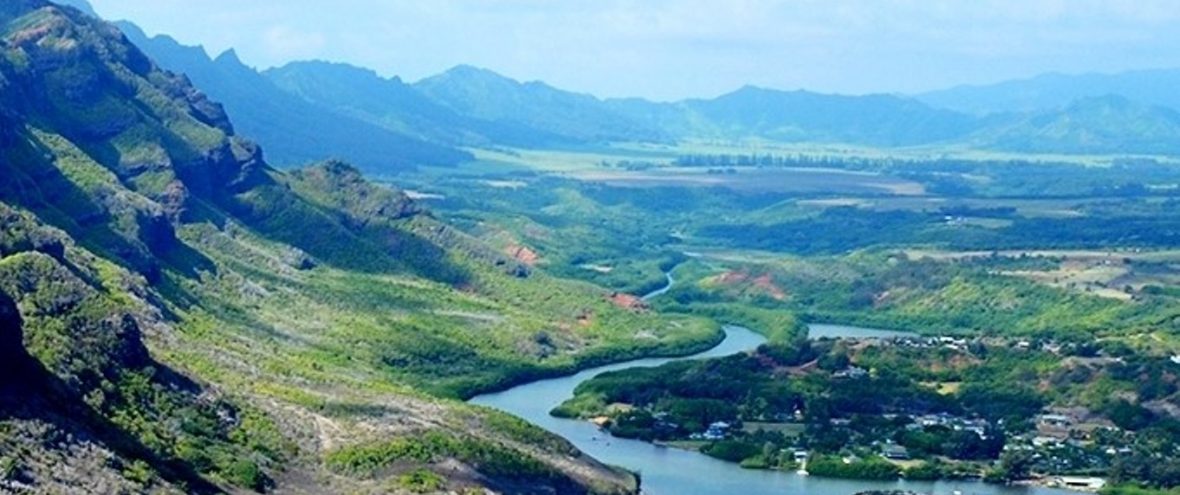
Malama Huleia refers to this ancient Hawaiian fishpond by the name Alakoko, the spelling most commonly used in the earliest references from the 1800s.
But this historic site has had many names,
Most people today call it the Menehune Fishpond and many folks use the name ‘Alekoko. However, Hawaiian Land Court records and Hawaiian language newspapers dating to the 1800s, in the earliest references, mainly use the spelling Alakoko.
An 1852 Land Court document about lands in Niumalu, by surveyor W.H. Pease, refers to ka loko o Alakoko (the Alakoko fishpond).
Issues of the newspapers Ka Leo o Ka Lahui and Nupepa Ka Oiaio from 1895 use Alakoko. In his 1923 book, Hawaiian Legends, William Hyde Rice, who was born on Kaua‘i in 1846, uses Alakoko. In her book Koamalu, Ethel Damon, who was born in 1883, uses Alakoko.
The alternate spelling Alekoko, without the addition of the diacritical `okino before the first letter, is seen, though rarely, before 1900. Not the first, but among the first to use the spelling Alekoko was Thomas Thrum, who was not Hawaiian-born and not from Kaua‘i, in a 1920 edition of the Journal of the Polynesian Society. The term with the Alekoko spelling appears in a story he wrote involving Menehune.
Thrum, originally Australian, was a storyteller and publisher, and a powerful voice in the recording of Hawaiian stories—including a fair amount of bogus Hawaiian history. After Thrum’s use of the spelling, Alekoko becomes an alternate spelling to Alakoko.
The big fishpond in the bend in the river has also gone by the names Pēpē‘awa and even Niumalu loko.
Pēpē‘awa, while it sometimes has been used to refer to the pond, is apparently the name of the land division in which it is found—the ili, which is the term for the subdivisions of an ahupua‘a.
Niumalu loko may simply be a term of reference rather than a valid name. It means “Niumalu pond” and may be used to refer to Alakoko in the way “City by the bay” refers to San Francisco.
The term Menehune Fishpond, which has gained popularity during the past century, is a reference to a complex story about either the entire construction or just the completion of the fishpond wall project by mythical Hawaiian forest dwellers.
If you’re interested in more about that, I humbly recommend my book on the subject, Menehune Mystery: The Original Tales and the Origins of the Myth, published by Mutual Publishing in Honolulu.
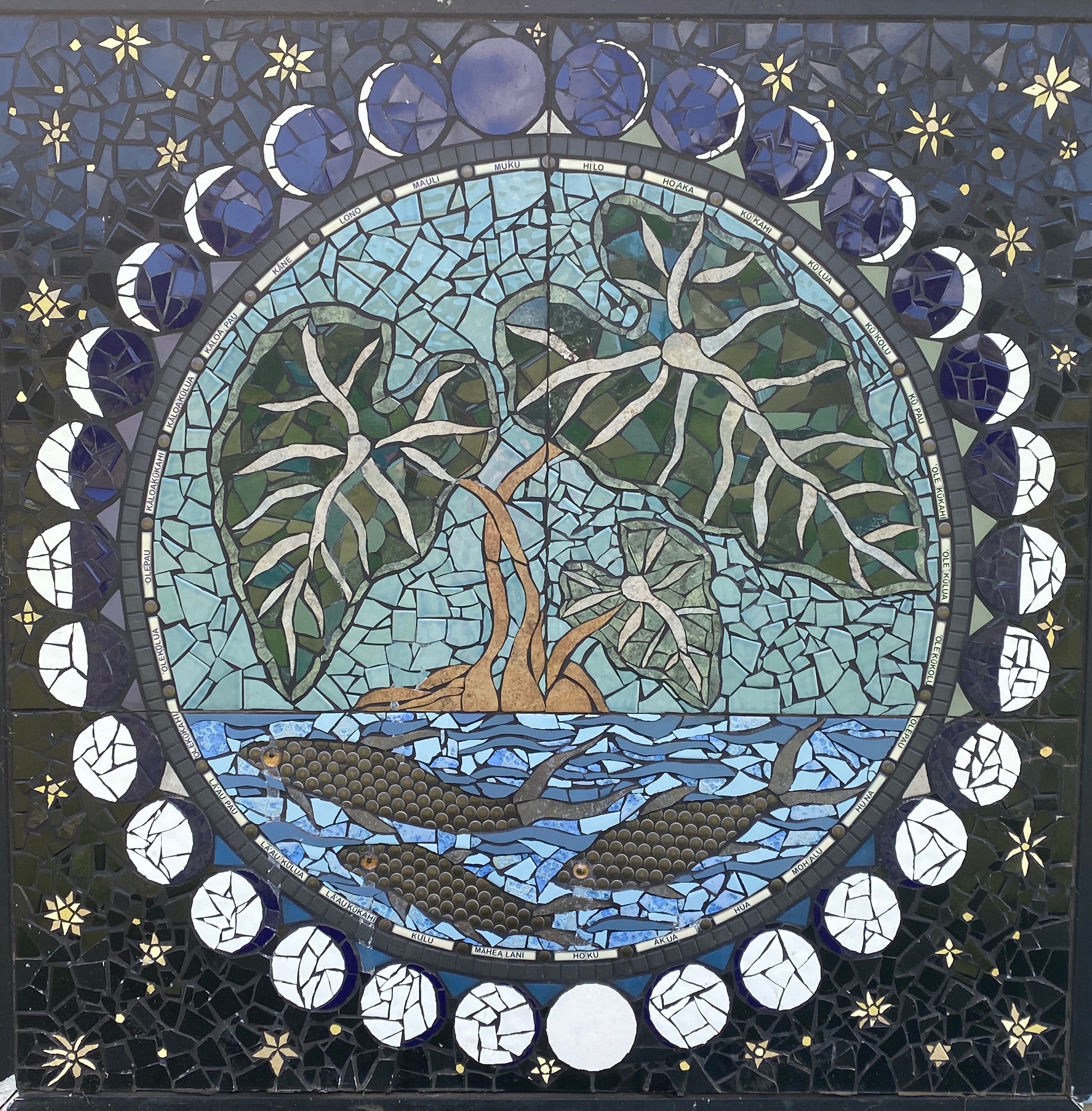
Malama Huleia is consciously integrating a kilo practice along with our restoration efforts. To kilo is to observe your environment which is specific to place and unique to each individual. The moon cycle influences the tides and movement of water through gravitational pull affecting ecosystems and our restoration work. The long tradition by our ancestors of observing the moon has resulted in knowledge of timing for optimal fishing and farming practices. Below is a brief overview of a few of the moons in this upcoming season.
New Moon/First moon – (Muku, Hilo)
October 16th 9:31am :: November 14th 7:07pm :: December 14th 6:16am
The Muku moon is the 30th moon, the end of the moon cycle. It is when the moon is in front of the sun; the backside is lit and the front side facing earth is dark. The first moon is a faint feather of light; key concept – “ilo” to germinate/sprout. Good time for planting seeds (not tubers or bananas). Great for beach and reef fishing, observing extreme high and low tides. A good for setting or re-setting personal goals and intentions.
First Quarter Moon – `Ole (`Olekūkahi, ʻOlekūlua, `Olekūkolu, `Olepau)
October 23rd 3:22am :: November 21st 6:45pm :: December 21st 1:41pm
There are four ‘Ole moons in the first quarter of the moon cycle; the seventh, eighth, ninth and tenth moons with the Olekūlua being the quarter moon. `Ole can describe – pausing, ceasing, peeling back or removing. It is generally an unproductive time but can be used to prune, mulch and weed. Not good for fishing. A good time to take action toward our goals.
Full Moon – Piha moons (Akua, Hoku, Māhealani)
October 31st 4:49am :: November 29th 11:29pm :: December 29th 5:28pm
There are three Piha moons; the fourteenth, fifteenth and sixteenth moons moon. A form of the word hōkū, star. When mahina is Hoku, she travels through the night from beginning to end (as do the stars). Excellent time for planting (except for kalo and bananas), seeds will be animated. Good for fishing at sea but not at shore. Watch for high waves. Time of culmination and celebration of efforts made toward our new moon intentions.
Third Quarter Moon – `Ole (`Olekūhahi, `Olekūlua, `Olepau)
October 9th 9:31am :: November 8th 3:46am :: December 7th 2:36pm
October 9th 9:31am :: November 8th 3:46am :: December 7th 2:36pmThere are three `Ole moons in the third quarter moon cycle; the twenty-first, twenty-second, and twenty-third moons with the ʻOlekūlua being the quarter moon. Not a good day for planting or fishing during the ʻOle moons. A good time to rest, refine and reflect – let go of anything that is not aligning with the goals and intentions set at the new moon.
Nearly 40 community members planted out dozens of native coastal plants Saturday , October 26, 2019, at the Alakoko Fishpond.
The imu crew
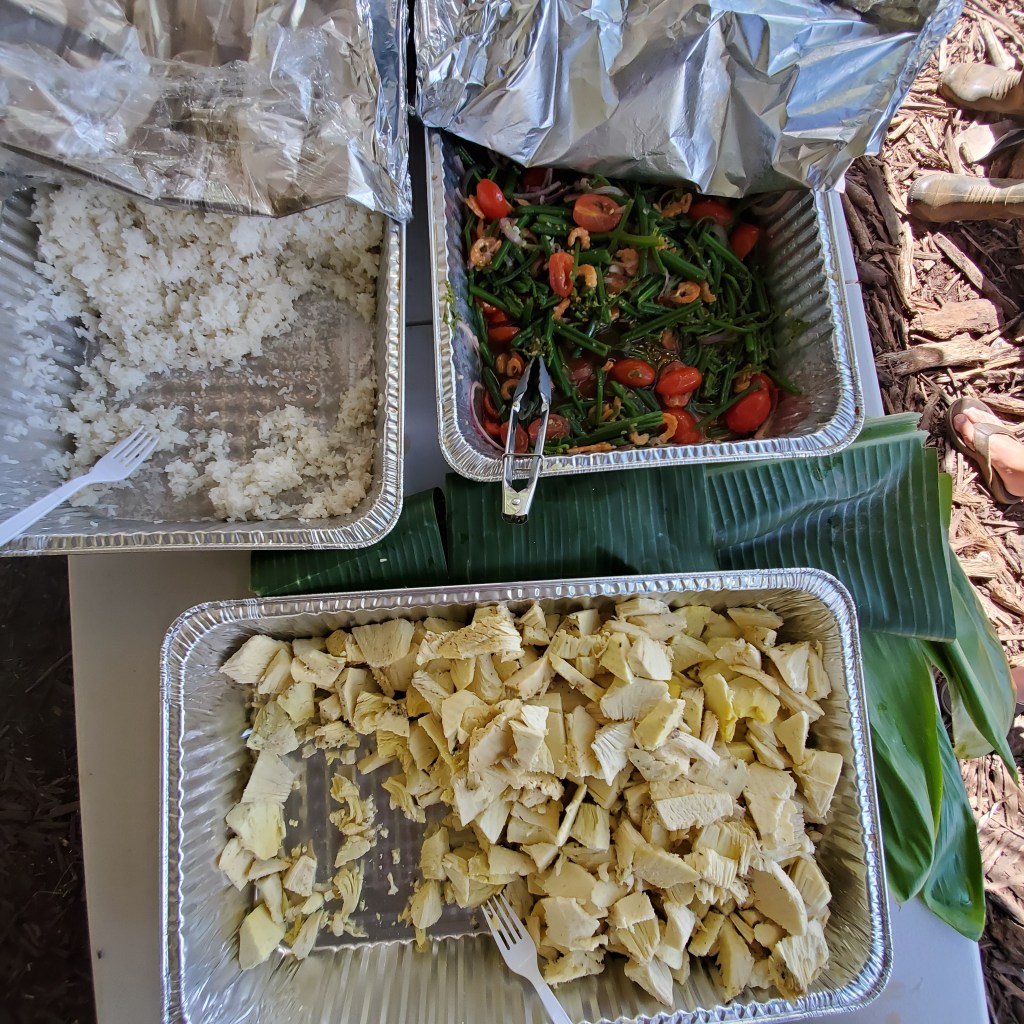
The workday, the one-year anniversary of Malama Hule`iaʻs first workday at the pond, culminated with the opening of an imu and an impressive luau spread. The imu had been started along the fishpond at 9 p.m. Friday and was opened at 11:30 am. Saturday.
Steamed breadfruit and pans of pork other goodies came out beautifully cooked.
Luau
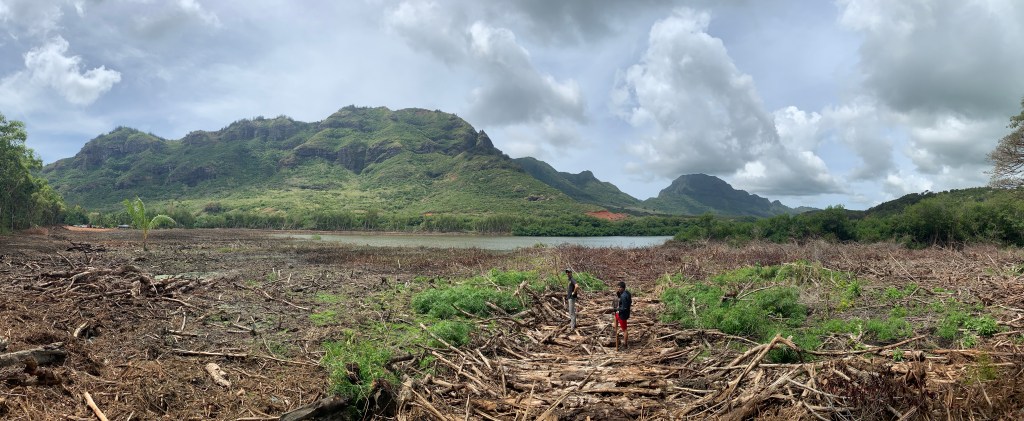
Before the feast, teams of volunteers prepared the native weaving sedge makaloa and other potted coastal plants for out-planting onto the shores of the pond, where mangrove had been removed. Little by little, the exposed mudflats are turning green.
Preparing plantsMudflats
Aʻeo ohana
The work was accompanied by the calls of nearly a dozen native Hawaiian stilts, aʻeo, and a trio of Hawaiian ducks, koloa, and other wildlife that has repopulated the waterʻs edge now that mangrove has been removed.
It’s been a year of community workdays at Alakoko! We want to thank all of our volunteers for their continued support and hard work. We will end our workday this weekend with an imu pa`ina. Come to learn more about the project and work with us Saturday October, 26th, 8am to imu time! Please questions and RSVPs to info@malamahuleia.org. Wear closed toed shoes that can get muddy, sun & eye protection and a water bottle.
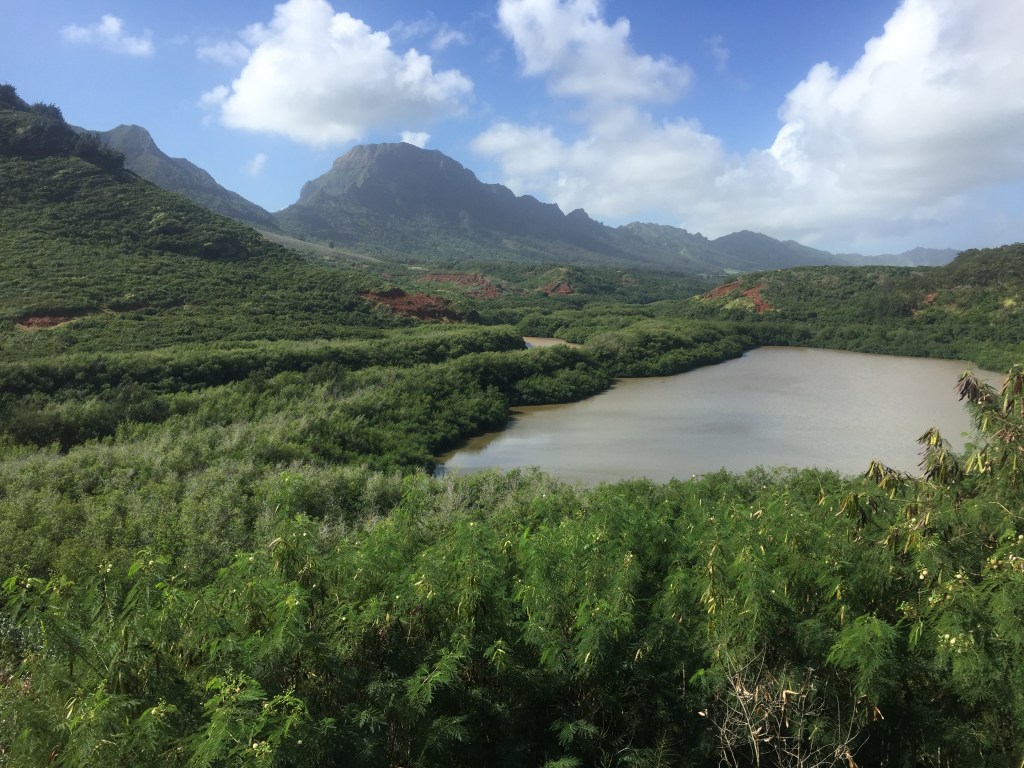
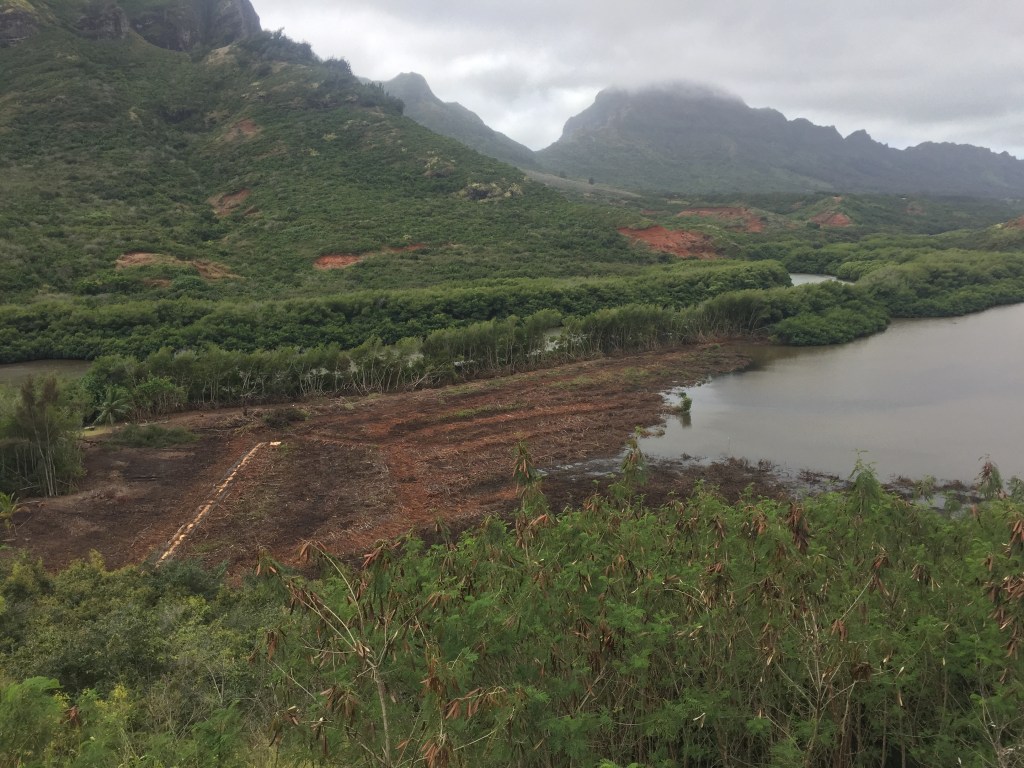
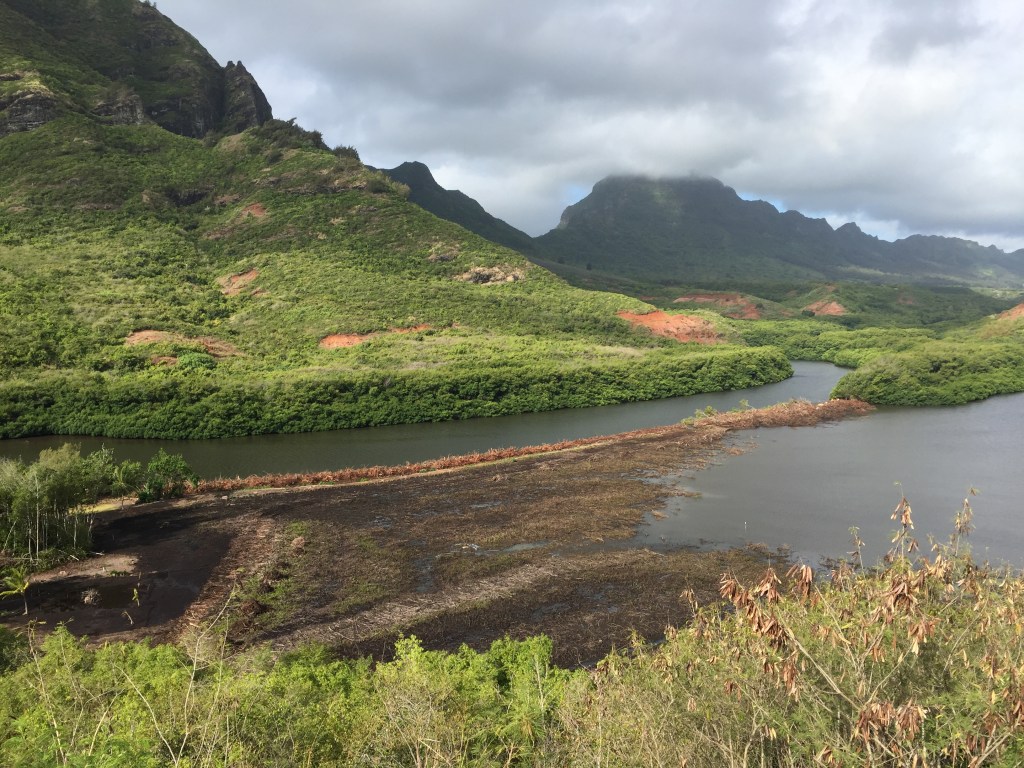
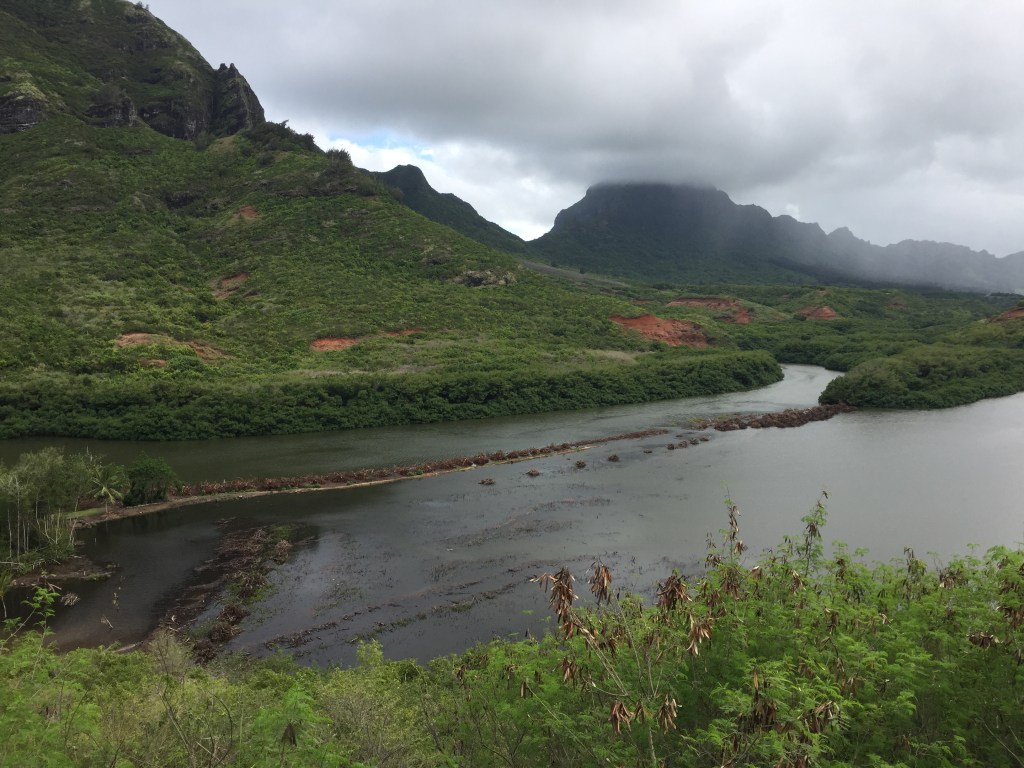
Below is a photo progression of the mangrove removal taken from the outlook on Hulemalu Road from December 2018 thru August 2019. Since the project began last year, October 2018 we have cleared approximately 11-acres if mangrove including that along the lower half of the fishpond wall.














 Mālama Hulē‘ia