Mālama Hulē'ia – Using traditional Hawaiian practices to restore a free-flowing, healthy, and productive Hulē’ia ecosystem at Alakoko fishpond. Kauai, Hawaii
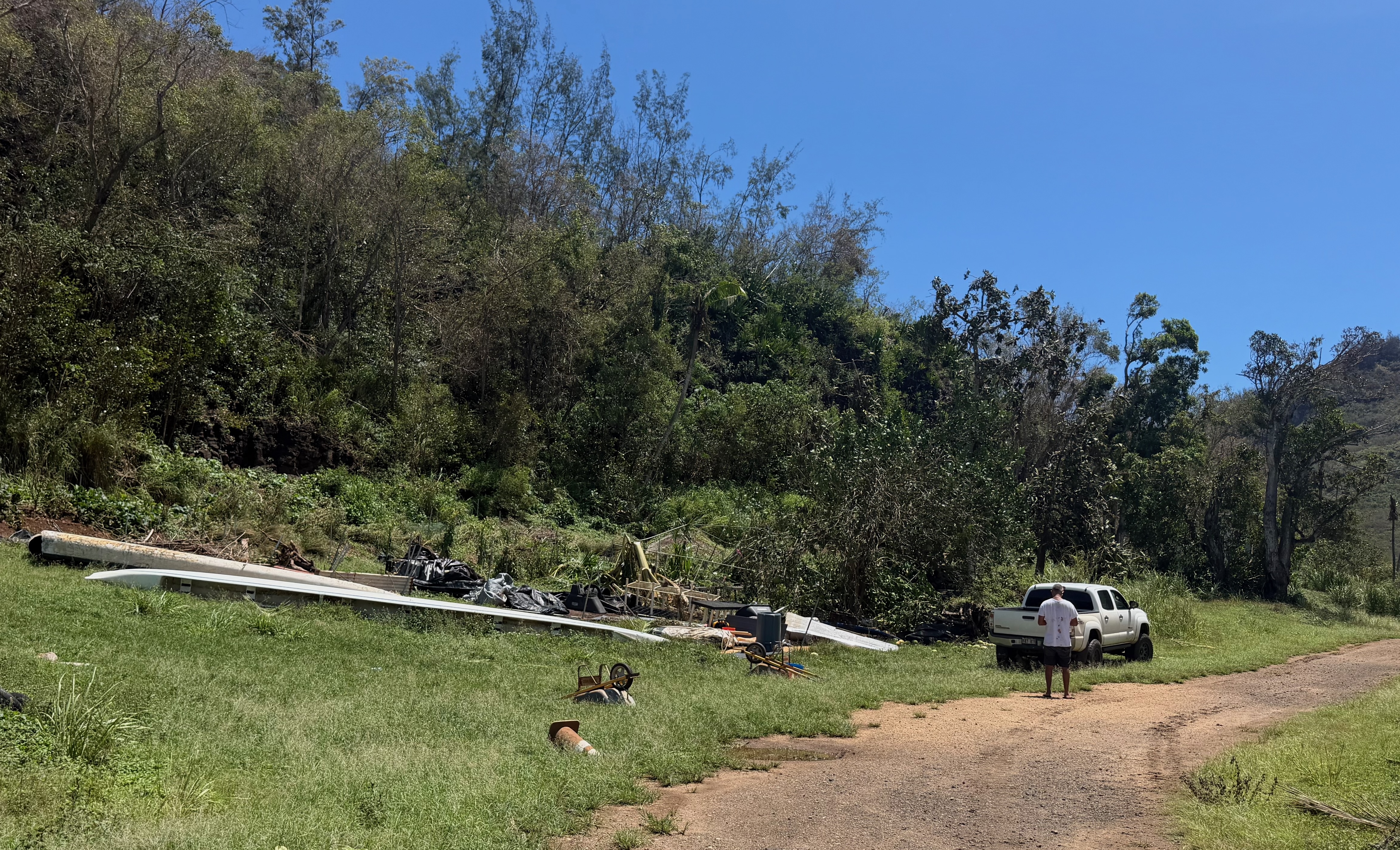
When we returned to the fishpond after the storm, we found downed trees, damaged infrastructure and erosion along portions of the kuana. Our old shower building was largely lost, the new nursery shed blown away, and it took some work just to regain access to the site.
But we also found plenty to be grateful for. We were all safe, the restored sections of the kuapā held strong, much of our infrastructure came through relatively well, and within days we were able to welcome our community back to Alakoko.
And you showed up.
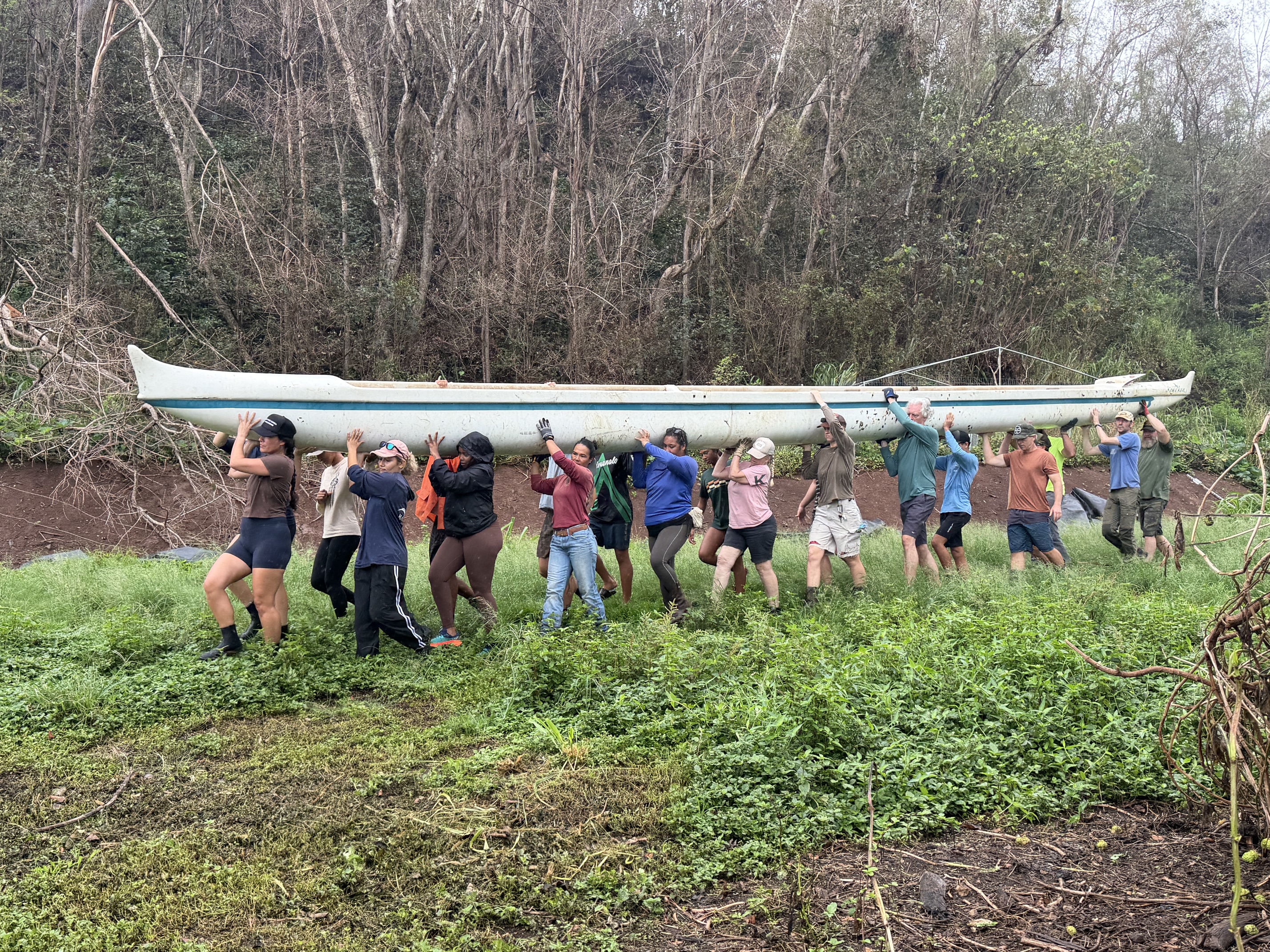
More than 40 people joined us for our September Community Workday, just days after the storm.
What had been planned as a regular community workday became a much-needed day of cleanup and recovery: clearing debris, salvaging materials and helping us begin putting things back in order.
Many of the people who came that morning are familiar faces. They return month after month to share int the hana, pulling weeds, moving rocks, planting, clearing, building, learning and caring for this place alongside us.
One of our regular volunteers shared that after the hurricane hit Kauaʻi, it felt especially important to have a place where she could come together with her community and know that her hands were making a real difference.
That stayed with us.
We often say that the work at Alakoko feeds us in many ways – mentally, spiritually, and physically. That Saturday certainly lived up to the saying.
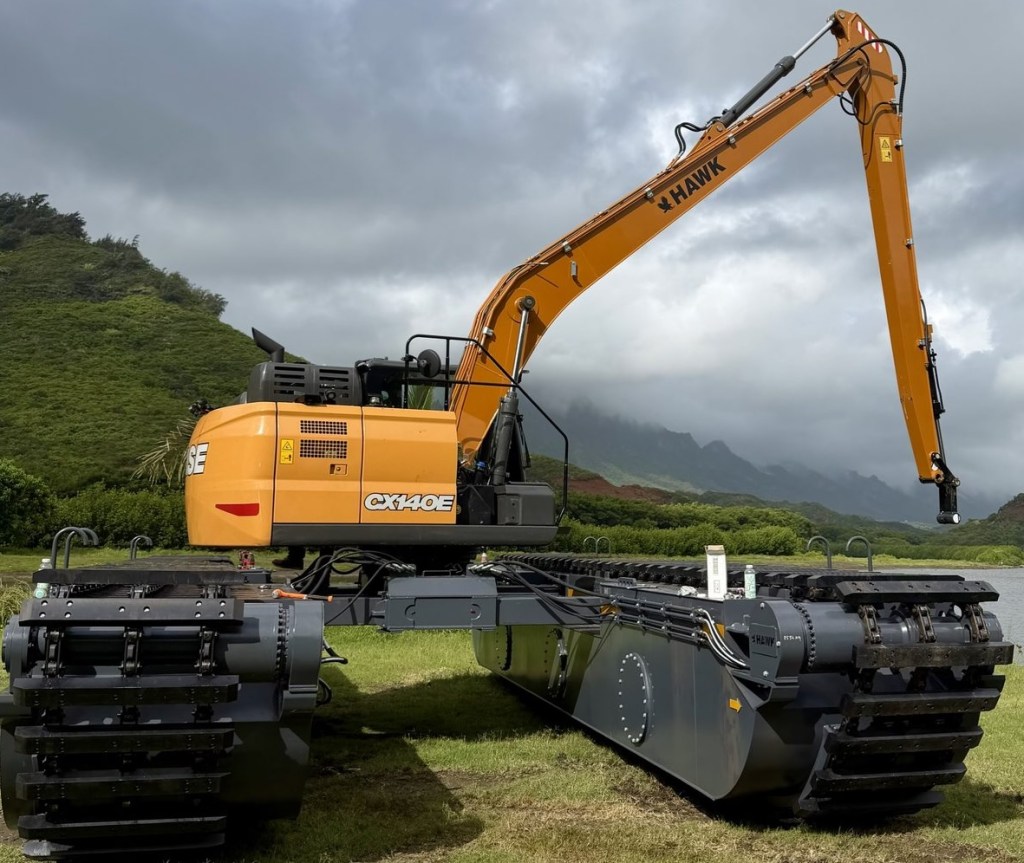
This is an exciting moment we’ve been working toward for quite some time: our amphibious excavator is officially at work in Hulēʻia.
Getting to this point has been quite a journey. After losing access to the machine that helped us with our earliest mangrove removal, we set an ambitious goal of purchasing an amphibious excavator of our own. Our community rallied behind the idea, and with the help of foundations, partners, and individual donors, we were able to make it happen.
Then came the not-so-glamorous, behind-the-scenes part: shipping, assembly, troubleshooting, negotiating, maintenance and repairs. So you can imagine how good it felt to finally watch the excavator make its way across the fishpond and start removing mangrove.
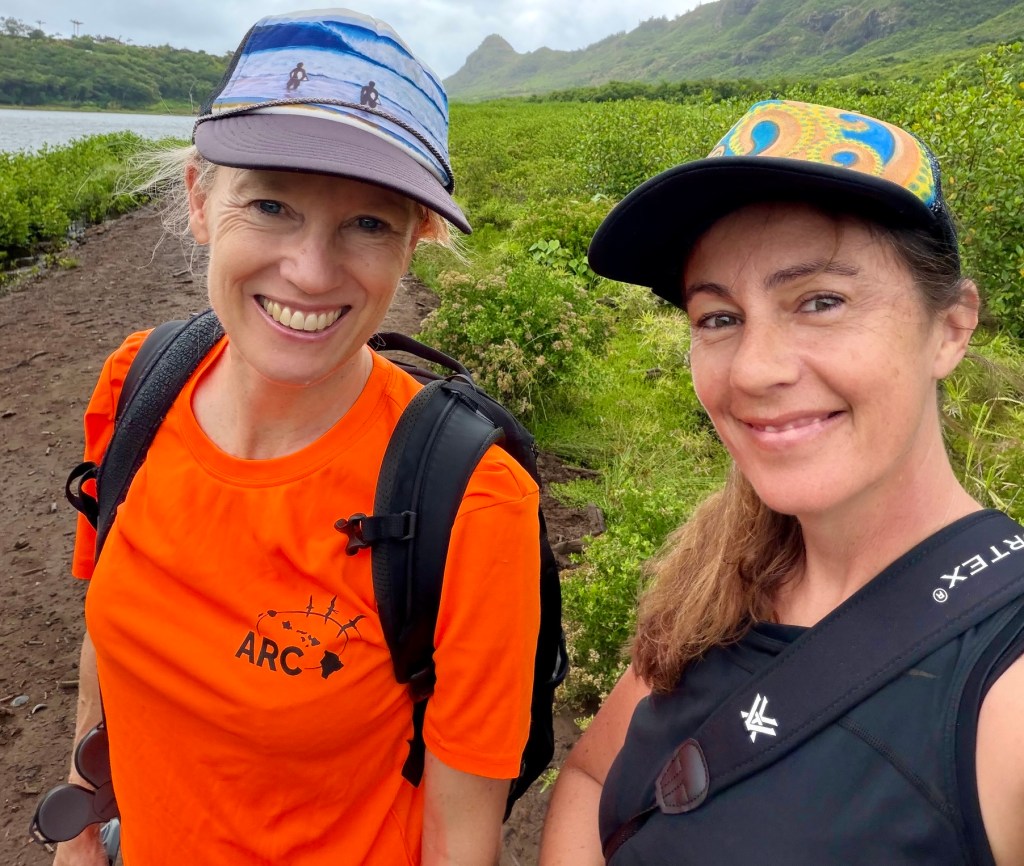
We’re starting with a relatively small stand of red mangrove that is under 15 feet tall. Before the machine got to work, Peleke conducted a beautiful blessing ceremony. Then, together with our partner Helen Raine of Archipelago Research and Conservation, we conducted a bird and nest survey to make sure there weren’t any waterbirds nesting in the work area and to meet our permit requirements.
Starting here gives our team a chance to learn the new machine, work out any kinks, and get some practice under our belts before we move into the much larger stands of mature mangrove after the bat pup-rearing season.
A Little Room for ʻŌpeʻapeʻa
There’s another reason we’re starting small. This time of year, we also have ʻōpeʻapeʻa to think about.
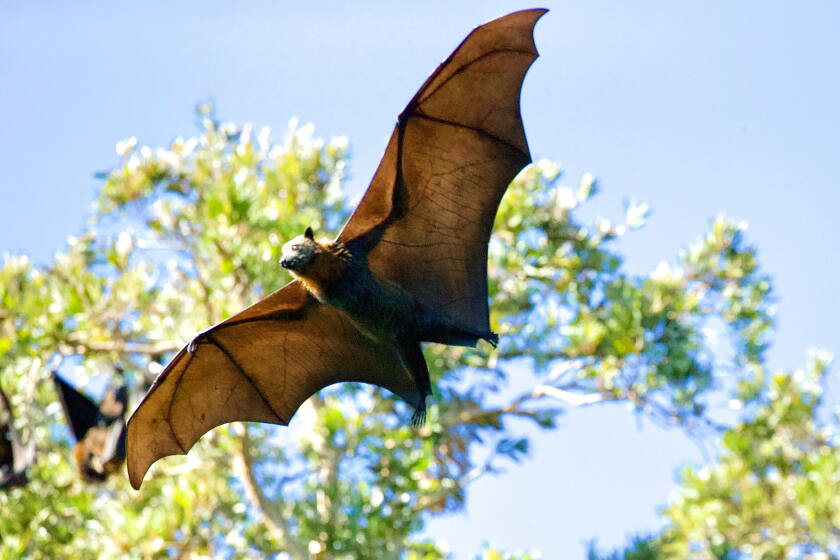
ʻŌpeʻapeʻa, or Hawaiian hoary bats, are Hawaiʻi’s only native terrestrial mammal. They’re solitary bats that roost in trees, and from June through mid-September, females are giving birth and caring for pups that may not yet be able to fly.
While ʻōpeʻapeʻa are thought to live in the Hulēʻia valley, we don’t have documented evidence of them roosting in the mangrove. Still, we take the precaution of leaving woody vegetation taller than 15 feet undisturbed during pupping season, just in case bats are using those taller, older-growth trees.
After September 15, when the seasonal restriction ends, we’ll be ready to move into the taller mangrove and begin tackling the remaining 15+ acres included in our current restoration work within the Hulēʻia National Wildlife Refuge.
And the work happening now is just a glimpse of what having this machine makes possible.
The amphibious excavator can travel and work in the soft, wet conditions where conventional heavy equipment simply can’t go. Having our own machine gives us the ability to take on work that previously required costly specialized contractors and, more importantly, gives us a tool we can use for years to come as restoration continues throughout Hulēʻia.
To everyone who helped us get here: mahalo. There were a lot of steps between the idea of owning this machine and watching it finally go to work. We’re incredibly grateful to the community that believed in the vision and helped make it possible.
And we’re just getting started.
Meanwhile, Something Else Is Growing
With a very large machine crawling around the fishpond, it’s easy for some of the quieter restoration work happening at Alakoko to get overlooked. So we wanted to share this, too.
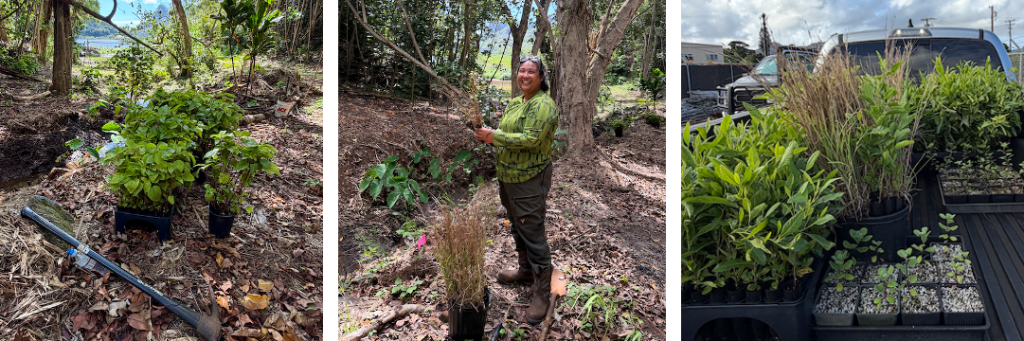
Through our growing partnership with the Hawaiʻi Department of Land and Natural Resources Division of Forestry and Wildlife (DOFAW), we recently received more than 500 native plants for restoration at Alakoko.
Many of these plants are headed to our five-acre puna wai riparian restoration area, a spring-fed freshwater corridor that connects with the surrounding wetlands and fishpond. Our team has been gradually removing invasive vegetation here and reestablishing a healthier plant community in its place.
This part of the restoration calls for a gentler approach. Rather than clearing everything at once, we’re working in phases: removing invasive vegetation, getting new plants established, and then gradually opening more of the invasive canopy as the new vegetation takes hold.
It takes time, but that’s part of the work.
And we love the contrast between these two projects. On one side of Alakoko, restoration looks like a massive amphibious excavator pulling invasive mangrove from the wetland. On another, it looks like our team and community volunteers putting small native plants into the ground and giving them a chance to grow.
Restoring Hulēʻia takes both.
There is a lot happening here right now, and we’re excited to finally be putting some long-held plans into action. Mahalo for following along, supporting the work, and being part of the community caring for this place.