Mālama Hulē'ia – Using traditional Hawaiian practices to restore a free-flowing, healthy, and productive Hulē’ia ecosystem at Alakoko fishpond. Kauai, Hawaii
As we come into spring, we find ourselves in a season of connection. Between people and place. Between planning and doing. And across the partnerships that make this work possible.
Last weekend felt like a really good example of that.
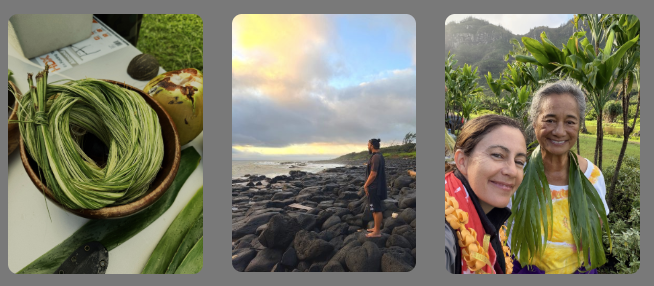
At sunrise on the spring equinox, our staff and a few board members gathered at Ahukini to welcome the first sunrise of the season, and then at Alakoko for an ʻaha ʻawa ceremony.
This is one of the ways we mark the shift in season and set intentions for what is ahead. It is also a commitment. To the work, to each other, and to continuing to show up for these quarterly gatherings.
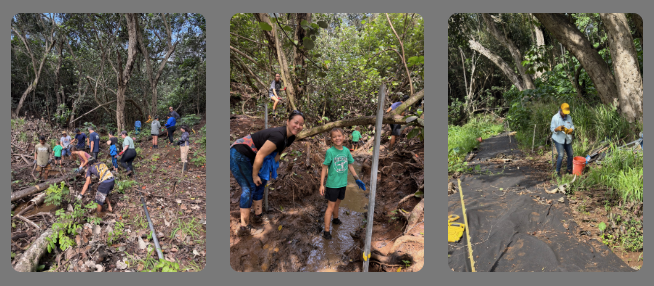
For the first time, we officially brought our community workday volunteers out to support restoration work within the Huleʻia National Wildlife Refuge.
This has been a long time coming.
This project focuses on a 5-acre riparian and punawai area that feeds into the broader wetland system and ultimately into Alakoko loko iʻa. It is a key freshwater source that helps maintain the balance needed for the fishpond to function.
During this first workday, volunteers helped clear debris from the recent storm and remove invasive vegetation from a section of the punawai (spring fed stream). It was so good to have all that positive fresh energy in that space…clearing space, getting eyes and hands into the area, and beginning the process of restoring flow and function.
The work is not just about planting. It is about restoring how water moves through this system.
We are starting by establishing native plants in the understory before removing invasive canopy. That sequencing is intentional. It helps prevent invasive species from taking over again and supports a more stable transition back to native habitat.
Over time, this work will:
Improve water quality entering the system
Reconnect freshwater flow with downstream wetlands and the fishpond
Restore habitat for native fish and waterbirds
Getting volunteers out there is a big step. It means we are moving out of the planning phase and into steady, on-the-ground restoration with community as part of the process.